ServicesRoof Treatments
Roof Treatments in Rotterdam, NY
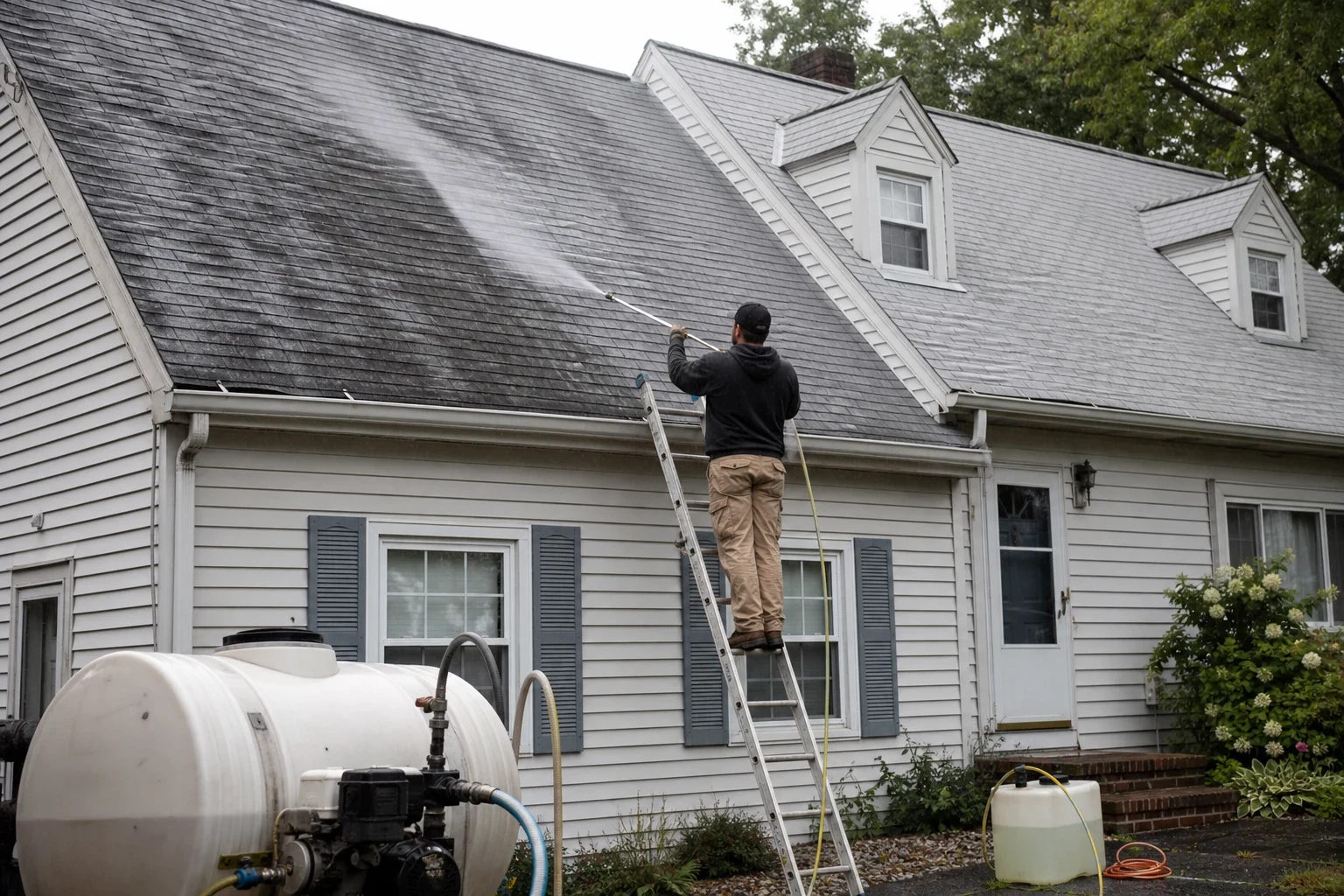
Dark streaks, green moss and crusty lichen do more than dull your curb appeal. We start with a close look at your roof and a plain account of what is growing there. Then we apply a gentle treatment that kills it at the root, with no pressure washer touching your shingles.
What a roof treatment does for your shingles
A roof treatment is a liquid application that kills the algae, moss and lichen living on your roof. The black streaks you see on so many asphalt shingle roofs are a hardy algae that feeds on the limestone filler in the shingles. Moss holds water against the surface, and lichen sends tiny roots into the granules. Left alone, all three wear a roof out sooner than it should.
We never put high pressure on shingles. Pressure strips the protective granules and can lift tabs, which causes the very damage you are trying to avoid. The treatment goes on gently, works over the following weeks, and rain finishes the job by rinsing away the dead growth.
Before we suggest anything, we look over every slope we can safely reach and show you photos of what we found. Long, damp springs in the Capital Region give growth plenty of time to settle in on shaded sides, so sometimes only one or two slopes need attention. If that is your roof, that is what we will tell you.
What's included in a roof treatment
- A careful inspection with photos
- We note where growth is heaviest and check for loose shingles, lifted flashing or soft spots along the way. You get photos and a plain summary before any work is scheduled. If we spot a problem a treatment won't fix, we say so.
- Protection for plants and landscaping
- Shrubs, flower beds and anything under the drip line get wetted down and covered before we start. We keep runoff from pooling on your lawn, deck or patio furniture.
- Low-pressure application
- The treatment is applied at about the pressure of a garden sprayer, coating the shingles evenly from ridge to edge. Nobody scrapes at the surface.
- Gentle moss removal where needed
- Thick mats of moss can block water from running off the roof. Where moss has built up, we loosen it by hand once the treatment has softened it, so the shingles underneath can dry out.
- Final rinse and walkthrough
- Before we leave, we rinse any drips off windows, siding and walkways, uncover your plants and walk the property with you. We explain how the streaks will fade over the coming weeks so you know what to expect.
Signs your roof is due for a treatment
Black or dark gray streaks
Streaks running down the north side or a shaded slope are almost always algae. They spread a little further every season.
Green moss between the shingles
Moss usually starts in the joints and along the bottom edges. Once it gets thick, it lifts shingle edges and traps moisture.
Pale, crusty patches
Flat gray-green or whitish spots that look stuck on are lichen. They grip tightly and loosen granules as they grow.
Granules piling up at the downspouts
A small amount is normal on a newer roof. A steady stream of dark grit on an older roof can mean growth is wearing the surface away.
A roof that stays wet long after rain
If one slope stays dark and damp for days, shade and growth are holding water there. That slope is usually where trouble shows up first.
How your roof treatment day goes
- 1
Free inspection and plain findings
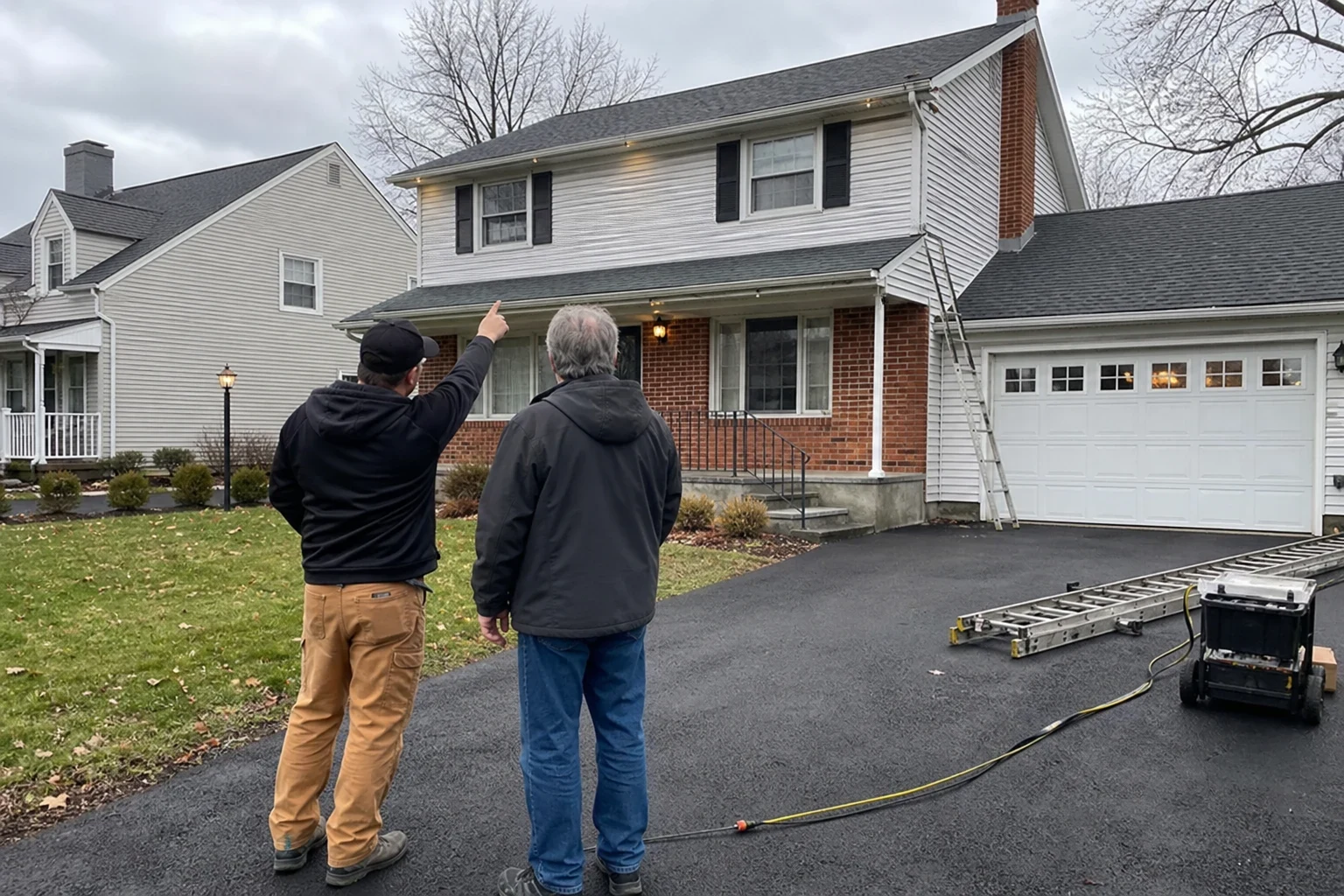
We come out, look the roof over and show you exactly what we found. You hear whether a treatment makes sense, and for which slopes.
- 2
A clear written quote
The quote lists the areas we will treat and what is included. You can take your time deciding.
- 3
Prep and protect
On the scheduled day, we set ladders carefully, cover your plants and move anything fragile away from the drip line. We'll let you know if you need to bring pets in or move a car.
- 4
Treat the roof
We apply the treatment at low pressure and handle any heavy moss by hand. Most roofs are finished in a few hours.
- 5
Walkthrough and what comes next
We clean up, walk the property with you and explain how the growth will die off and wash away with the next rains.
What affects the cost of a roof treatment
Every roof is different, so we price it after the inspection rather than guessing. Your quote spells out what we are treating and why. There are no surprise add-ons on the day of the work.
- Roof size and pitch
- A larger roof takes more product and more time. Steep pitches need extra safety setup, which adds labor.
- How heavy the growth is
- Light streaking needs a single even application. Thick moss or widespread lichen takes more product and hand work.
- Access and height
- Two-story homes, tight side yards and roofs over decks or sunrooms take longer to set up safely.
- Landscaping to protect
- Dense gardens and plantings right along the foundation take more time to wet down and cover properly.
Roof treatment questions
Something not covered here? (518) 665-3531
Will the treatment damage my shingles?
No. The product goes on softly, at about the force of a garden sprayer, and no one rubs or power-washes your shingles. Heavy pressure is what knocks granules loose and cuts years off a roof, so it has no place in how we work.
How long before the streaks are gone?
The growth begins dying soon after treatment, but the stains fade gradually as rain rinses them away. Most roofs look noticeably better within a few weeks, and heavier staining can take a few months. Thick moss may need some hand removal, which we cover in your quote.
How long does a treatment last?
That depends on how much shade your roof gets, how close the trees are and how heavy the growth was to begin with. Sunny roofs tend to stay clear longer, while shaded slopes come back sooner. We'll give you an honest read on your roof during the inspection.
Is it safe for my plants and pets?
Your plants get a good soaking and a cover before we begin, then another rinse once we finish. Dogs and cats are best kept indoors for the work itself, and they can head back out once the treated spots are dry. If there's a garden you're especially careful with, show it to us and we'll plan around it.
Can you treat my roof and install permanent lighting together?
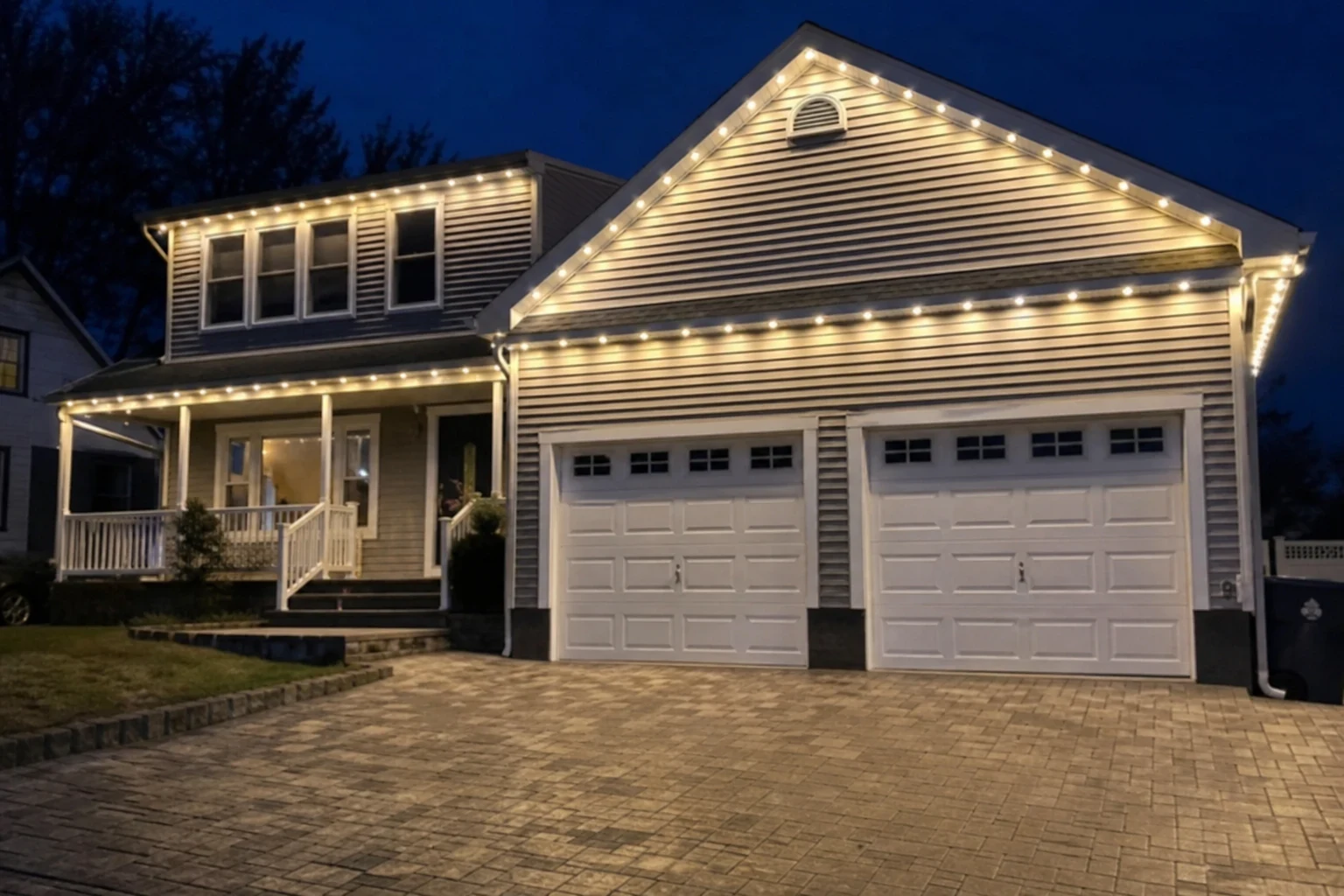
Yes, and we can look at both during one visit. Many homeowners like to treat the roof first so their permanent lighting goes up on a clean roofline. We'll talk through the timing when we give your quote.
What time of year works best?
We treat roofs from spring through fall, when temperatures are above freezing and we have a dry stretch for the product to work. Upstate winters are not the time for it, so spring is a good moment to call and get on the schedule.
Find out what's growing on your roof
We'll take a careful look, show you what we found and give you a straight answer on whether a treatment is worth it. The quote costs you nothing.